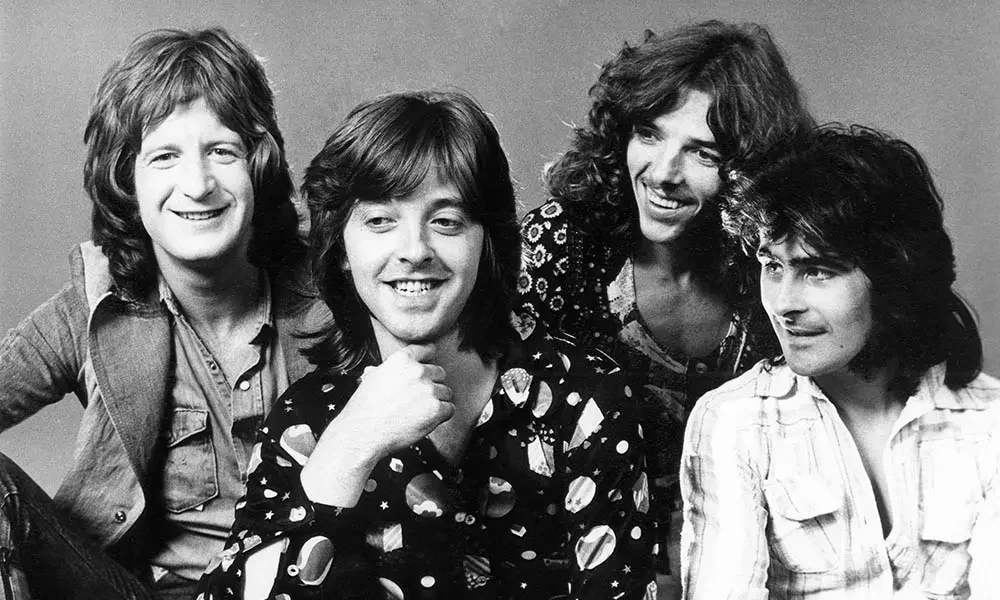
Badfinger

Instead of Badfinger, they should have called themselves Bad Luck because that’s what they had.

Badfinger was signed by The Beatles’ Apple Records. Paul McCartney wrote their first worldwide hit “Some And Get It” for Ringo Starr’s film (with Peter Sellers), “The Magic Christian.”

The Beatle connection haunted the band. If you didn’t look too close they sorta looked like a younger version of the Fab Four. And people tended to hear Beatle trappings in Badfinger songs but the comparisons were usually unflattering.
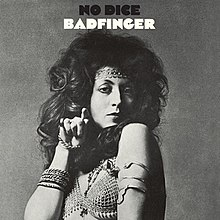
No Dice

Starting in late ‘70 Badfinger produced four great songs, including “No Matter What” (from “No Dice”)” “Day After Day” and “Baby Blue” (both on “Straight Up”).

The fourth, the ballad “Without You,” was composed by guitarist/singer Pete Ham and bassist Tom Evans.

While originally recorded by Badfinger, it was covered by John Lennon’s buddy Harry Nilsson. His version went to #1 on the pop charts. That didn’t really sit too well with the group.

Day After Day
Baby Blue

Leaving Apple in ‘74, or walking away from the label’s self-demolition, Badfinger signed with Warner Records. Of course, the six-figure advance disappeared. No real mystery, their management took it.

Now consumed by financial troubles, Ham left the group. The following year, depressed over everything that had happened, he visited his accountant who told him he was broke. He then went home and hung himself.
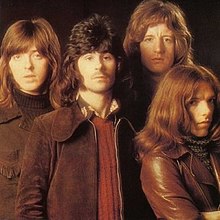
Badfinger

Badfinger was done. Drummer Mike Gibbins did session work and guitarist Joey Molland formed a band that opened for Peter Frampton

In the late ‘70s there were attempts to revive Badfinger. The surviving members even hit the road.

Following an ‘83 U.S. tour, Evans, exhausted from battling for his share of songwriting royalties, especially for “Without You,” followed Ham and committed suicide by hanging.

Decades later, the song “Baby Blue” was heard during the climatic finale of the AMC crime/drama series “Breaking Bad.” As a result, the song and band had a brief revival.

###
DON’T MISS A BEAT

Get Weekly Rock News Directly to Your Inbox

We don’t spam! Read our privacy policy for more info.

Similar Posts

  • The Offspring

    The Offspring isn’t a bad moniker but it’s sure no Clowns Of Death. Now that’s a name! Guitarist Bryan “Dexter” Holland and bassist Greg Kriesel (Greg K.), both ex-Clowns of Death, started Manic Subsidal with singer Doug Thompson and drummer Jim Benton. Two things happened when Thompson and Benton bailed. First, Holland assumed singing duties…

  • Greta Van Fleet

    There are a lot of valid reasons for skipping the high school prom but being on tour is usually not one of them.  With Greta Van Fleet band members still in school, the Frankenmuth, MI, based band signed a recording contract with Lava/Republic Records and embarked on a tour to support their EP “Black Smoke Rising.”…

  • B-52s

    The great thing about alcohol is briefly, very briefly in fact, all things seem possible. With a buzz on, drinking away the evening in a Chinese restaurant in Athens, GA, future members of the B-52s, who had little or no prior musical experience, decided to form a group. The name came not from the lethal…

  • Pearl Jam

    Just as Seattle’s Mother Love Bone looked like the next big thing, lead singer Andrew Wood overdosed on heroin. Stone Gossard (guitar) and Jeff Ament (bass) decided to keep going. They added Mike McCready (guitar) and Dave Krusen (drums). In an inspired move, they linked with vocalist Eddie Vedder who was in San Diego. Vedder…

  • Black Rebel Motorcycle Club

    The Elements. It’s not much of a name. Fortunately, group members concurred, changing their moniker to the Black Rebel Motorcycle Club, which they lifted from the ’50s Marlon Brando movie, The Wild One. B.R.M.C. formed in ’98 with high school pals, Peter Hayes (guitar/vocals) and Robert Turner (bass/keyboards/vocals). They, in turn, recruited Englishman Nick Jago…

  • Yes

    Loading their songs with rapid-fire chord changes (“Roundabout”), key changes (playing in one key is just too restrictive) and time changes (they weren’t content with 4/4), Yes set out to be groundbreakers. Jon Anderson’s airy vocals battled with guitarist Steve Howe and keyboardist Rick Wakeman for attention. No band could pull off what Yes attempted…