Rush
Bob and Doug McKenzie (Rick Moranis & Dave Thomas) were two characters on the “Great White North,” a featured segment on the early ’80s weekly late-night comedy SCTV. The “typical Canadians” guzzled beer, feasted on back bacon and argued. The ultimate put down line was “Take off.”
The lads wanted to make an album and needed a hit single. So they recruited fellow Canadian Geddy Lee from Rush to record “Take Off.”
The song, with Lee’s vocals breaking through Bob and Doug’s bickering, hit the charts like a missile (for a comedy track, peaking at #16). Bob and Doug went on to make the funny movie “Strange Brew” and Lee went back to Rush, a notch more famous than before.
Bob & Doug McKenzie
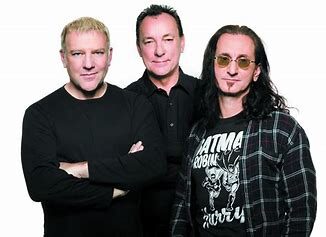
Bassist/keyboardist/vocalist Lee, guitarist Alex Lifeson and drummer John Rutsey formed Rush in ’69 as a Hard Rock covers band (Cream, Hendrix, Led Zep, etc.). Four years later, they recorded their first album and shopped it around. No one was interested so they started their own label, Moon Records.
A copy of the album was sent to legendary Cleveland Rock station WMMS. Donna Halper, a staff DJ, brought the group to the attention of Mercury Records, who re-released the “Rush” album. Along the way, Rutsey left for health reasons and was replaced by Neil Peart.
Rush records with science fiction/fantasy lyrics (courtesy of Peart) did all right but nothing spectacular.
Then came the band’s seventh album, “Permanent Waves,” with “Spirit Of Radio” providing the breakthrough Rush had been looking for.
Spirit Of Radio

Permanent Waves
The following year, ’81, Rush released “Moving Pictures” with the instrumental “YYZ” and the group’s signature song “Tom Sawyer.” ’82 (the same year “Take Off” scored) saw the release of “Signals” and Rush’s most popular single “New World Man.”
Tom Sawyer
Lee has called the song the band’s “defining piece … from the early ’80s.”
New World Man
Rush continued to produce successful albums through the remainder of the ’80s (“Grace Under Pressure,” “Power Windows” and “Hold Your Fire”). They also released “live” albums sometimes augmenting their sound with keyboards.
At the end of the decade Rush left Mercury for Atlantic.
Their first release for their new label was “Presto” which had a more straight-ahead, less Progressive Rock, approach. “Roll The Bones,” with the rhythmic title track, was next. The “Counterparts” set had keyboards by John Webster and string arrangements. It was not one of their stronger efforts.
After taking three years off Rush returned in ’96 with “Test For Echo.” The album momentarily tied them with KISS as the group with the most U.S. gold records. The live “Different Stages” appeared in ’98. The ’02 studio effort “Vapor Trails” was deemed passable by critics and didn’t fare any better with fans.
Recorded in November of ’02, “Rush In Rio” came out a year later.
Rush’s 19th studio album was ’07’s “Snakes & Arrows,” the trio’s first studio effort in five years. “It’s big, it’s bold, and I think it’s some of the best work we’ve done in years,” said Lee.
They then unfurled “Snakes & Arrows Live” in ’08. The concert album was recorded the previous October in Rotterdam, Netherlands.
Then came “Retrospective I (1974-1980),” “Retrospective II (1981-1987)” and “Retrospective III (1989-2008),” The compilations contained album cuts, previously unreleased live tracks and remixes.
Snakes & Arrows
Clockwork Angels
With live albums, retrospectives and tours behind them (for now) Rush set about recording new material. Work began on “Clockwork Angels” in Nashville that yielded a couple songs.
The group then headed out on tour. When that was completed, a year had passed. Rush didn’t go to Toronto’s Revolution Recording until the fall of ’11.
A press release stated that “Clockwork Angels” “chronicles a young man’s quest across a lavish and colorful world of steampunk and alchemy as he attempts to follow his dreams.”
Rush received their ninth Juno Award (the Canadian Grammys) when “Clockwork Angels” was named Rock Album of the Year.
“We’ve been saying for a long time, years, that this wasn’t a big deal. Turns out, it kind of is,” said Peart during the ’13 ceremony when Rush was inducted into the Rock and Roll Hall of Fame.
Rush went on indefinite hiatus which took on a greater sense of permanence when Peart announced he was now a “retired drummer.” “Lately Olivia has been introducing me to new friends at school as ‘My dad—He’s a retired drummer’,” shared Peart. “True to say—funny to hear. And it does not pain me to realize that, like all athletes, there comes a time to … take yourself out of the game. “
The band remained optimistic about making new music (with Peart), but less certain on whether they’d ever tour again.
The speculation ended when Peart passed away due to an aggressive form of brain cancer, on January 7th, 2020, in Santa Monica, CA. He had been diagnosed three and a half years earlier but kept the illness a closely guarded secret until shortly before his death.
Lifeson went on to launch the band Envy Of None while Lee, in ’23, published his autobiography, “My Effin’ Life” and hosted a four-episode series titled “Geddy Lee Asks: Are Bass Players Human Too?”
Next, Lee and Lifeson announced plans for a 2026 headline tour, “Fifty Something,” to celebrate Rush’s music, legacy, and Peart’s life.
“It’s been over 10 years since Alex and I have performed the music of Rush alongside our fallen bandmate and friend Neil,” offered Lee. “Alex and I have done some serious soul searching and come to the decision that… it’s time for a celebration of 50-something years of Rush music.”

Lee & Lifeson
###