Yes

Loading their songs with rapid-fire chord changes (“Roundabout”), key changes (playing in one key is just too restrictive) and time changes (they weren’t content with 4/4), Yes set out to be groundbreakers.

Jon Anderson’s airy vocals battled with guitarist Steve Howe and keyboardist Rick Wakeman for attention. No band could pull off what Yes attempted without a solid rhythm section – bassist Chris Squire and drummer Bill Bruford.
Roundabout

Eventually, the band got caught in its own excesses and saw personnel changes (Wakeman and Bruford left and were replaced by Patrick Moraz and Alan White respectively) before halting all together.

Anderson and Squire founded Yes in the “anything is possible” environment of the late ’60s with the idea of stretching Rock’s boundaries.

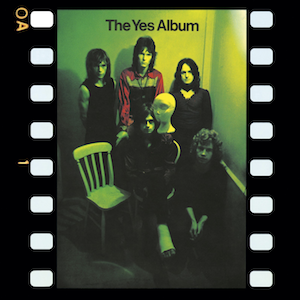
The Yes Album

Yes opened for Cream at the latter’s farewell concert at London’s Royal Albert Hall and the Iron Butterfly on that group’s final European tour. These excursions led to a recording contract and a self-titled debut.

Their sophomore effort “Time And A Word” saw the addition of Howe. Following “The Yes Album,” the band’s third set, the flamboyant Wakeman joined.

“Fragile” with “Roundabout” was next and represented the group’s commercial peak. “Close To The Edge” was the last ’70s Yes album with its strongest and best-known line-up.

It was the band’s first album to feature keyboardist Rick Wakeman, who replaced Tony Kaye.

The Record Assocation of America (RIAA) certified sales of over two million copies.
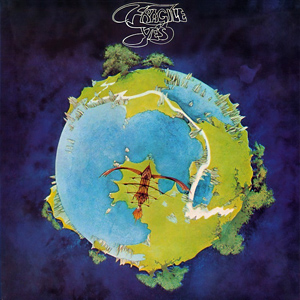
Fragile

Big Generator

The band released five albums between 1972 and 1980 before the band’s original members re-launched Yes in the early ’80s with “90125” and the single “Owner Of A Lonely Heart” and the lesser album “Big Generator.”

“90125” reached #1 on the Billboard 200. The band then move from Progressive Rock toward a pop-oriented and commercially accessible direction but “Big Generator” peaked at #17 on the Billboard survey – likely due to the band’s internal and creative differences.

Owner Of A Lonely Heart

Squire, the only band member heard on every Yes studio album, passed away on 06/28/15, a month after revealing he had been diagnosed with leukemia. He was 67.

“Chris was a very special part of my life; we were musical brothers,” wrote Anderson.

###
DON’T MISS A BEAT

Get Weekly Rock News Directly to Your Inbox

We don’t spam! Read our privacy policy for more info.

Similar Posts

  • Warren Zevon

    Warren Zevon always had a unique perspective. He earned it. After his first album bombed, Zevon found work writing commercial jingles. If that doesn’t alter your point of view, nothing will. Excitable Boys His return was marked by a self-titled album which contained several classic songs including “Hasten Down The Wind” and “Poor, Poor Pitiful…

  • Frijid Pink

    “House Of The Rising Sun” is a traditional Folk song that was first recorded in the ‘30’s and later covered by Pete Seger, Joan Baez and Bob Dylan, among others, in the late ‘50s and early ‘60s. That was before The Animals, a British Blues band, took it to #1 in the U.S., U.K. and…

  • Jane’s Addiction

    Numerous bands, with their best days long behind them, set aside long-standing disputes and regroup to record and tour. It offers a chance to perform again and score a paycheck. Usually, these efforts garner some attention and enthusiasm but very little in the way of headlines. An exception happened in September of ’24. Jane’s Addiction…

  • Shinedown

    Shinedown’s first hit “Fly From The Inside” was the result of one of those fortunate “demanding” situations. While recording ’03 release “Leave A Whisper,” the Jacksonville, Floridia group was getting pressured to write a hit single. So “Fly From The Inside” was composed in a few hours. It was time well spent since the song…

  • Judas Priest

    Judas Priest had the twin guitar attack of Glenn Tipton and K.K. Downing and along the way they found Rob Halford’s roaring vocals. Over their career they had five drummers before Scott Travis joined in ’89. Ian Hill handled bass. Judas Priest had their first major label release in ’77. “Sin After Sin” was produced…

  • Billy Idol

    After slaving for years in Generation X, Billy Idol figured it was easy to be a Rock star. At least that’s what he claimed. Of course, coming from the Punk world there was a ‘limit” to how far he’d compromise. Essentially, he stopped at mainstream Rock (with gothic touches). The “experiment” worked with Idol getting…