Queen
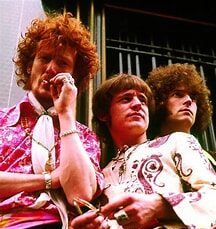
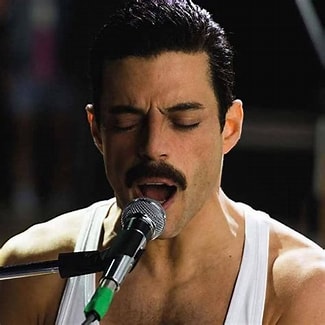
Fredrick Bulsara (pictured above) was born in Zanzibar. Eventually, his family immigrated to England.
The young singer figured Bulsara wouldn’t cut it in the music business and changed it to Mercury, after the winged messenger.
Mercury came up with the name Queen. He thought it was regal and splendid. And yes, it could possibly have a gay connotation.
The track “Killer Queen” broke through in both the U.K. and U.S.
Bohemian Rhapsody
Next, Queen created “Bohemian Rhapsody.”
Six minutes in length, record people figured the song was far too long for the three-minute standard of commercial radio (even after all the ’60s extended songs).
The band held firm and was rewarded with a hit.
By Queen’s third album, “Sheer Heart Attack,” they were on top in their native U.K. and getting noticed in the U.S.
The next two albums “A Night At The Opera” and “A Day At The Races” (the titles taken from two of the Marx Brothers’ more popular films) amply displayed Queen’s both vocal and instrumental prowess.
“Night At The Opera” has sold over 11 million copies worldwide with 3.6 million moved in the U.S,
“Opera” had “You’re My Best Friend” and the classic or classical “Bohemian Rhapsody.” “Races” featured “Tie Your Mother Down” and “Somebody To Love.”
Queen, probably more than any ’70s group, showed a diversity and a willingness to reinvent. While Mercury received the most credit for the band’s innovations guitarist Brian May, bassist John Deacon and drummer Roger Taylor, all accomplished musicians, made countless creative contributions that propelled the band forward.
While “Killer Queen” was straight ahead, “Bohemian Rhapsody” had operatic overtones. Contrast that with the stripped down, bass riff driven “Another On Bites The Dust,” the truly retro production of “Crazy Little Thing Called Love” or “We Will Rock You/We Are The Champions,” one of the most played sports anthems.
This is why “Greatest Hits” garnered sales of over 25 million copies, making it one of the best-selling albums of all time. But Queen wasn’t just a singles act. The total album sales topped 90 million units.
Queen occasionally made mistakes like the “Flash Gordon” soundtrack, but they were always able to bounce back.
Another One Bites The Dust
Crazy Little Thing Called Love
On the day before his death in ’91 Mercury publicly announced he was suffering from AIDS.
His death effectively put an end to the group – for the time being.
Queen eventually started touring again, initially fronted by Paul Rodgers (Free, Bad Company), and later by Adam Lambert (an impressive runner-up on American Idol, a singing competition).
What returned Queen to the spotlight was the biopic “Bohemian Rhapsody.” The film was in theaters after years of planning, discussions and negotiations followed by production, directorial and cast changes.
The film, released in’18, starring Rami Malek as Mercury, had a $51.1 million opening and netted $141 million worldwide to become the most successful Rock biopic in history. The film’s highlight was the recreation of Queen’s Live Aid charity set in London.
Radio Ga Ga
###