
Nine Inch Nails
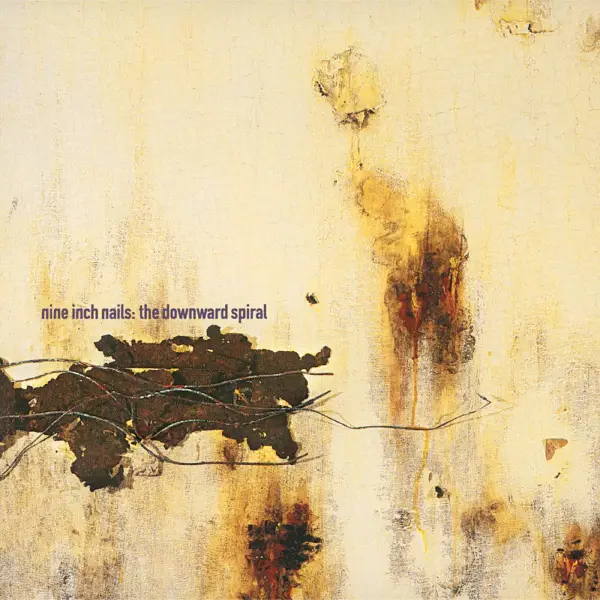
– The Downward Spiral
A harrowing statement that refuses comfort and earns its scars.
Nine Inch Nails carve a brutal psychological document on The Downward Spiral. The album presses inward with obsession, control, collapse, and self-interrogation rendered in sound that feels claustrophobic and intentional. Every decision carries consequence. Nothing feels accidental.


Best of…
The production favors abrasion and tension. Guitars grind. Electronics hiss, pulse, and corrode the spaces between beats. Rhythms feel physical and punishing, locking the listener into patterns that refuse relief. Trent Reznor delivers vocals with a sense of exposure that feels confrontational and deliberate.
Lyrically, The Downward Spiral obsesses over power, shame, desire, and annihilation. The writing strips language to essentials, circling fixation and self-loathing without theatrical distance. The album holds its gaze steady, letting repetition and fixation become the point rather than decoration.
Choice Tracks
Mr. Self Destruct
A violent opening statement that establishes control and obsession as core themes. The track’s pounding rhythm and distorted textures feel coercive, while the vocal delivery sounds commanded by impulse and compulsion rather than narrative distance.
March of the Pigs
Jagged time shifts and percussive attack drive this song forward with manic force. The structure mirrors instability, turning frustration and contempt into motion, with Reznor’s voice cutting through the chaos like a provocation.
Closer
Built on tension and fixation, the song uses repetition as pressure. The beat feels intimate and mechanical, while the lyrics strip desire down to impulse, power, and exposure, creating a song that feels invasive by design.
Hurt
A stark closing statement that drains the album of noise and leaves only reflection. The restrained arrangement frames regret and self-reckoning with brutal clarity, allowing vulnerability to carry the final emotional weight.
The Downward Spiral stands as a disciplined act of sonic self-examination, using abrasion, repetition, and control to explore obsession and collapse. Nine Inch Nails deliver an album that feels confrontational, intentional, and psychologically relentless.
The Downward Spiral is a beautifully decayed artifact of pain, rage, and self-destruction. It drags you under and locks you inside a mind that’s fraying at the edges. The beats hit like blunt-force trauma, the synths slash like exposed wire, and the whispers and screams feel too close for comfort. Every sound is either crawling toward oblivion or fighting against it, and the tension never lets up. This is ugliness turned into something magnetic, a descent into darkness that somehow feels impossible to turn away from.
The production is a masterpiece of controlled chaos. Machines grind and sputter, distorted guitars scream in agony, and rhythms lurch unpredictably, yet somehow everything locks together with absolute precision. It’s mechanical but deeply human, a tightrope walk between cold electronic precision and unfiltered emotion. There’s beauty here too, but it’s the kind that cuts—melodies that creep in just long enough to make you feel something before the whole thing explodes again.
More than anything, The Downward Spiral is an experience, the kind that leaves a mark long after it ends. It taps into something primal, something terrifyingly real. This isn’t rebellion for the sake of it or shock value with no substance—it’s a record that exposes the rawest parts of being alive, then dares you to keep listening. And when it’s over, silence has never sounded so loud.
“Mr. Self Destruct” doesn’t so much start the album as it does detonate it. A relentless barrage of machine-gun drums, metallic shrieks, and Trent Reznor’s voice clawing through the wreckage like a man already past the breaking point. The sheer violence of it isn’t just sonic—it’s emotional, physiological. Then there’s “Piggy,” which drops the tempo but twists the knife, riding a lazy, sludgy groove while Reznor mutters, then howls, like he’s trying to keep himself from unraveling in real time. And that drum breakdown? Like the moment a drunk realizes he’s not just buzzed—he’s about to hit the floor.
“March of the Pigs” is pure manic energy, an industrial tantrum that stops and starts like it’s short-circuiting. It gives you two seconds to breathe, then sucker-punches you again. It’s ugly and perfect. “Closer,” of course, is the hit—Reznor at his most perversely seductive, whispering filth over a bassline that slithers like something dangerous in the dark. It’s become shorthand for every goth-industrial cliché, but the song itself still feels forbidden, unhinged in a way pop songs rarely get to be.
But the real descent happens with “Reptile”—seven minutes of slow, mechanical doom that crawls like something dripping oil and venom. The guitar sounds corroded, the percussion like bones on concrete, and Reznor? He’s deep in the pit, fixated on something he knows is destroying him, but he can’t look away. And then there’s “Hurt,” the grand finale, the moment where all the rage, sex, and destruction finally collapse into unbearable regret. Stripped-down, fragile, and so raw it leaves bruises, it’s not just the best song on the album—it’s the one that lingers, the one that makes you wonder if you really wanted to take the trip in the first place.