The Who: 10 Classic Songs
It’s nothing short of ironic that a group that first got noticed for the line “I hope I die before I get old” (from “My Generation”), lasted over fifty years.
The Who was one of the few bands not dominated by their lead singer. Roger Daltrey had to compete with the guitar antics of Pete Townshend, who was also the band’s primary songwriter. There was also Keith Moon’s over-the-top manic drumming. Meanwhile, bassist John Entwistle stood stoically off to the side providing a solid foundation. Somebody had to.
Each entry has a slot number, song title, parent album and year released.
10. The Kids Are Alright (My Generation, 1965)
“When I wrote this song I was nothing but a kid, trying to work out right and wrong through all the things I did,” guitarist Pete Townshend offered. “I was kind of practicing with my life.. I was kind of taking chances in a marriage with my wife. I took some stuff and I drank some booze. There was almost nothing that I didn’t try to use. And somehow I’m alright.”
The Kids Are Alright
9. Magic Bus (Magic Bus: The Who On Tour, 1968)
Written during the recording of the band’s debut album it was not recorded until 1968. Though a moderate hit on the U.K. and U.S. pop charts it became one of the band’s most popular songs and a concert staple.
Magic Bus
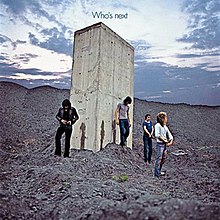
8. Bargain (Who’s Next, 1971)
The song’s intended subject is God rather than a woman. Townshend has acknowledged that it is his favorite song on “Who’s Next.” “This song expresses how much of a bargain it would be to lose everything in order to be at one with God.”
Bargain
7. Behind Blue Eyes (Who’s Next, 1971)
“Behind Blue Eyes” really is off the wall because that was a song sung by the villain of the piece (Jumbo), the fact that he felt in the original story that he was forced into a position of being a villain whereas he felt he was a good guy,” explained Townshend.
Behind Blue Eyes
6. My Generation (My Generation, 1965)
It is considered one of the band’s signature songs.
Townshend has credited “Young Man Blues” by Jazz and Blues pianist Mose Allison as the inspiration for the song, saying “without Mose I wouldn’t have written ‘My Generation’.”
In the clip below a charge was placed in Moon’s drums. Unaware of this Moon added a second charge. The explosion at the end of the song is said to have damaged Townshend’s hearing.
My Generation
5. Won’t Get Fooled Again (Who’s Next, 1971)
Townshend described the song as one “that screams defiance at those who feel any cause is better than no cause,” Townshend commented. “Don’t expect to see what you expect to see. Expect nothing and you might gain everything.”
Won’t Get Fooled Again
4. Love, Reign O’er Me (Quadrophenia, 1973)
The title refers to Meher Baba’s comment that rain was a blessing from God; that thunder was God’s Voice.,” said Townshend.
The song was originally intended to be part of the unreleased album, “Rock Is Dead – Long Live Rock” which evolved into “Quadrophenia.”
Love, Reign O’er Me
3. Pinball Wizard (Tommy, 1969)
Townshend once called the song “the most clumsy piece of writing (I’d) ever done.” However, it was a commercial success on both sides of the Atlantic becoming one of the most recognizable songs from the “Tommy” opera and a concert favorite.
Pinball Wizard
2. Baba O’ Riley (Who’s Next, 1971)
According to Townshend, after the band’s performance at the Isle of Wright Festival in 1969 he saw a field covered in garbage left by the audience. A few months later Townshend saw the “the absolute desolation of teenagers at Woodstock.
Both experiences inspired the line “teenage wasteland.” The irony was that some listeners considered the song a teenage celebration: ‘Teenage wasteland… we’re all wasted!'”
Baba O’ Riley
1. I Can See For Miles (The Who Sell Out, 1967)
The track reached #10 on the U.K. Singles chart and peaked at #9 on the Billboard Hot 100 (the band’s best showing on the chart).
Townshend was disappointed believing it would be the Who’s first #1 single. He wrote the song in 1966 but had held it back as an “ace in the hole.” “To me it was the ultimate Who record, yet it didn’t sell. Townshend remembered.
A British critic claimed that “I Can See for Miles” was the “heaviest” song he had ever heard. The Beatles’ Paul McCartney had not heard the song but the story goes he wrote “Helter Skelter” in an attempt to make an even “heavier” song than the one praised in the review.
I Can See For Miles
The Who:
Roger Daltrey: Lead Vocals
Pete Townshend: Guitars/Keyboards/Backing Vocals
John Entwistle -Bass/Backing Vocals
Keith Moon -Drums
###