
U2
– The Joshua Tree
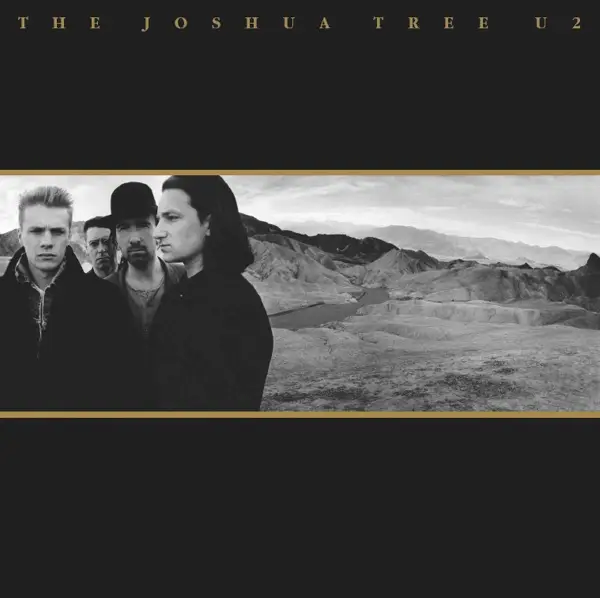
The Joshua Tree stands as a confident declaration carved in sound and intent.
U2 arrive with The Joshua Tree sounding assured and deliberate. Space matters here. Silence presses as hard as sound, and the band uses it to widen each gesture. Songs breathe, stretch, and declare without rush.


Best of…
The record carries faith, politics, and intimacy as shared subjects. U2 frame belief as labor and conviction as routine practice. The Joshua Tree keeps its gaze outward, aiming statements at a crowd rather than a mirror.
Production choices favor clarity and patience. Guitars shimmer in long arcs, rhythm sections hold firm, and vocals speak plainly. U2 let repetition build authority, giving The Joshua Tree a steady pulse that rewards attention over time.
Choice Tracks
Where the Streets Have No Name
An opening surge built on repetition and release, the song sets the scale for The Joshua Tree. Guitars stack like rising weather, rhythm presses forward, and the vocal frames yearning as public address, turning private doubt into shared chant.
I Still Haven’t Found What I’m Looking For
Faith is treated as motion and patience. The groove circles with gospel calm, handclaps and bass holding steady, while the melody keeps asking. On The Joshua Tree, belief sounds like work done daily, sung with humility and resolve. The chorus invites a room to breathe together.
With or Without You
Restraint drives the drama here. A narrow harmonic loop tightens the focus, bass carries the weight, and delay stretches time. The vocal clings to repetition until devotion feels physical, a pressure that refuses to dissipate. With or Without You stakes intimacy as a public vow.
Bullet the Blue Sky
A sermon delivered with electricity and heat. Drums strike hard, guitar screams in clipped phrases, and the lyric points outward with fury. The Joshua Tree turns protest into ritual, anger sharpened by rhythm and volume. The stance feels urgent and communal.
The Joshua Tree presents U2 at their most declarative and focused. Space, repetition, and conviction guide each song, blending faith, politics, and intimacy into statements built for wide rooms and long listens, grounded by patience and clarity.
The Joshua Tree is a widescreen, panoramic experience. U2 took everything that made them great in the early ‘80s and blew it up to mythic proportions. The sound is massive, the emotions are raw, and the stakes feel impossibly high. It’s a record obsessed with the contrast between grandeur and isolation, drenching every moment in a sense of longing. There’s desperation in the way the music stretches itself toward something bigger—whether it’s America, faith, or just the idea of escape. The band doesn’t just play songs here; they build landscapes, vast and open, where every note feels like it’s reaching for the horizon.
That expansive sound isn’t just for show—it’s what gives the album its pulse. Guitars shimmer and echo like ghostly transmissions from the past, while rhythms push forward with a steady, determined energy. And then there’s the voice at the center of it all, soaring, pleading, sometimes even preaching, but always gripping. The music itself feels like it’s constantly searching for something just out of reach, mirroring the album’s obsession with America as both a real place and a dream too big to hold. It’s a record that understands longing better than most, whether it’s for justice, love, or salvation.
What makes The Joshua Tree endure is how effortlessly it shifts between intimate and enormous without losing its soul. It’s an album full of contrasts—spiritual yet grounded, political yet personal, hopeful yet haunted. The band captured lightning in a bottle here, a perfect mix of idealism and disillusionment, wrapped up in a sound that still rings out like a call across an empty desert. Decades later, it hasn’t lost its urgency. It still sounds like it’s searching, still sounds like it’s reaching, and still sounds like it believes in something worth chasing.
U2’s The Joshua Tree is primarily classified under the following genres:
- Classic Rock – The album is rooted in classic rock instrumentation and songwriting.
- Alternative Rock – While mainstream in success, the band’s sound aligns with the atmospheric and introspective elements of alternative rock.
- Post-Punk – U2’s early influences from post-punk remain evident, particularly in the guitar textures and production.
- Heartland Rock – The album incorporates American folk and blues influences, reminiscent of heartland rock’s storytelling and expansive sound.
- Arena Rock – With its anthemic choruses and grand production, The Joshua Tree fits the arena rock style, designed for large audiences.
The album blends these styles to create its signature sweeping and cinematic sound, which helped define U2’s global success.