
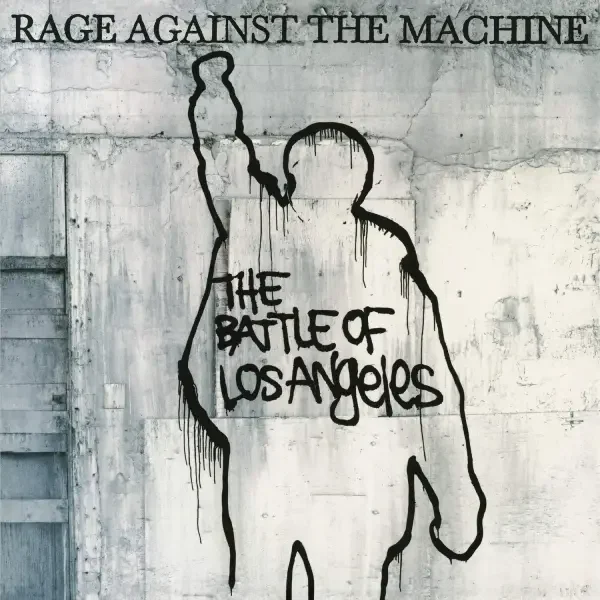
Rage Against the Machine
– The Battle of Los Angeles
The Battle of Los Angeles is an explosion disguised as an album. Every riff lands like a clenched fist, and every word hits with surgical precision. It’s not a record for background noise—it demands confrontation. Tom Morello’s guitar doesn’t play so much as it argues, bending strings into sirens and slogans, while Zack de la Rocha turns language into weaponry. There’s no detachment here; it’s all nerve endings and fury.


Best of…
The band functions like a machine fueled by outrage and rhythm. Brad Wilk’s drumming feels elemental—thunder that never stops rolling. Tim Commerford’s bass grinds like an engine that refuses to idle. Together they build a sound that feels both structured and volcanic, as if the grooves themselves might fracture under the weight of their intent. Each song operates as a statement, carved out of disillusionment but delivered with terrifying precision.
Every second bleeds conviction. There’s no sermonizing, no detour into grand abstractions—just raw presence. The record captures a moment where politics and pulse merge into something elemental, the sound of a band staring down the institutions they were told to obey. The Battle of Los Angeles doesn’t soothe. It scorches, it rattles, and it demands that you stay awake.
Choice Tracks
“Testify”
A burst of command and distortion, the song ignites immediately. Morello’s guitar spits static like broken circuitry while de la Rocha’s cadence drills into the listener with rhythmic authority. Power condensed into pure motion.
“Guerrilla Radio”
Anthemic without the pomp. The hook kicks in like a riot chant—precise, relentless, and impossible to ignore. It’s the sound of rebellion engineered to move both body and conscience.
“Calm Like a Bomb”
A paradox of restraint and eruption. The bass slithers beneath the surface before detonating, giving de la Rocha a platform to spit pure combustion. Each pause feels like the inhale before the next firestorm.
“Sleep Now in the Fire”
A scorched-earth groove that refuses to blink. Morello’s solo sounds like an electrical malfunction in real time, and de la Rocha rides the chaos like a prophet with a megaphone.
The Battle of Los Angeles turns anger into architecture. Every beat, riff, and scream feels deliberate—rebellion sharpened into rhythm. Rage Against the Machine deliver protest as precision, rage as art, and volume as truth.