
Love
– Love
A debut that speaks plainly, hits hard, and leaves no wasted space.
Los Angeles shows up here as pressure and promise. Love sounds wired, alert, and slightly unruly. The playing leans sharp. The vocals carry nerves and confidence in equal measure. Every track pushes forward with intent rather than polish.
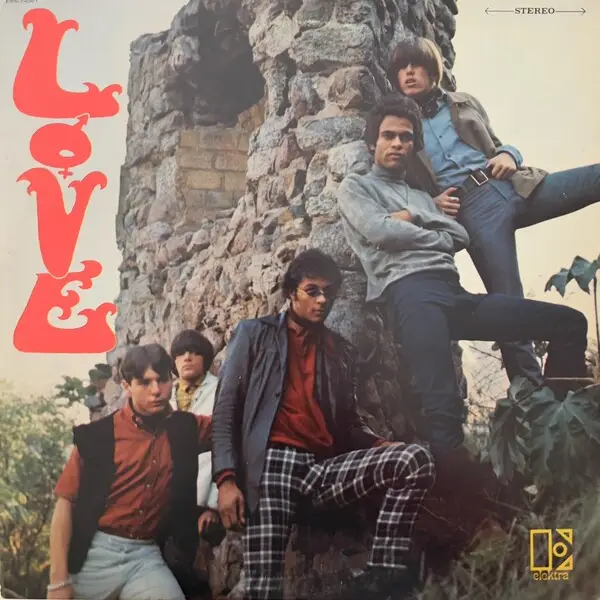


Best of…
Arthur Lee sings like someone testing limits in public. His phrasing feels conversational yet commanding. The band keeps the songs tight, even when the mood turns restless. Nothing drifts. Nothing feels ornamental. The record moves fast and stays focused.
Love holds its ground through attitude and clarity. The writing favors direct statements over grand gestures. Short songs land cleanly and leave marks. The album speaks in bold lines and refuses distraction.
Choice Tracks
My Little Red Book
A rush of clipped chords and restless momentum sets the album’s tone. The vocal delivery snaps with urgency, turning romantic frustration into propulsion. The song captures youthful bravado without smoothing its edges or sanding down its impatience.
A sharp opening move that wastes no time establishing tone. The melody snaps into place immediately, riding a pulse that feels both urgent and controlled. It’s heartbreak delivered with a clenched jaw, turning emotional fallout into forward motion.
Can’t Explain
Energy drives every second here. The arrangement stays lean and bright, built for motion. The vocal leans into confusion and desire with clarity. It works as a statement of intent: fast, committed, and eager to connect.
Built on tension rather than release. The song circles its feelings instead of resolving them, letting repetition and phrasing do the work. Its power comes from what’s held back, not what’s spelled out.
Signed D.C.
This track carries weight through restraint. The melody sits low and steady while the lyric watches a life slip sideways. Compassion surfaces without sentimentality. The performance treats the subject seriously and trusts the listener to feel the gravity.
A stark pivot inward. Sparse and direct, the song strips away bravado and leaves something fragile in its place. The performance feels unguarded without slipping into excess, giving the album its emotional center.
Seven and Seven Is
Pure velocity. The rhythm barrels forward while the vocals strain against the tempo, creating friction that feels dangerous and alive. It closes the album like a door slammed with intention.
Hey Joe
The song unfolds with tension baked into its pacing. The band keeps the groove taut, allowing the narrative to breathe without losing control. It feels confrontational and street-level, presenting violence as fact rather than spectacle.
Love delivers sharp songs with purpose and attitude. The album favors momentum, clear writing, and confident performances. Its power comes from focus and nerve, presenting direct emotions without decoration or drift.
This debut lands with a sense of intent that belies its era. Love sounds like a band arriving fully formed, not experimenting so much as declaring territory. The album pulls garage grit, folk tension, and street-corner melody into something sharper and more alert than most of its peers. Nothing here feels ornamental. Every song moves with purpose, even when it drifts.
Arthur Lee’s writing already shows a knack for compression—big emotions packed into lean frames. The record balances vulnerability and swagger without tipping into sentimentality. There’s romance here, but it’s restless and often uneasy. The band plays like they’re pushing against invisible walls, tightening the music rather than letting it sprawl.
What gives Love its staying power is restraint. The arrangements never overreach. Guitars stay clipped, rhythms stay firm, and melodies do the heavy lifting. It’s an album that earns attention by refusing to chase it, trusting its songs to carry the weight.