
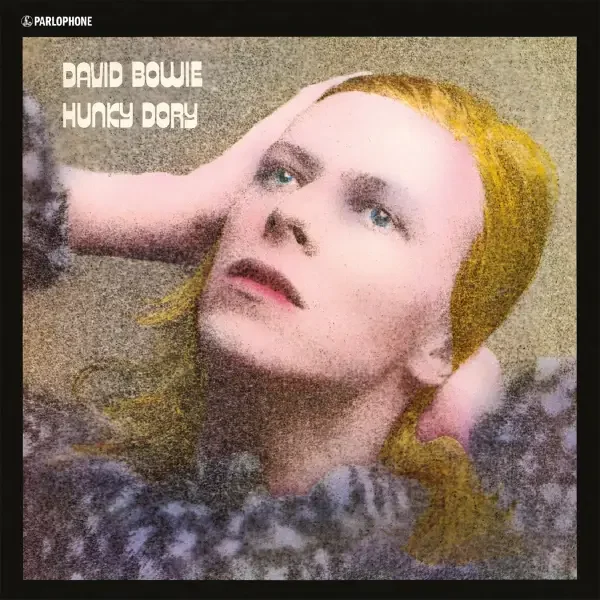
David Bowie
– Hunky Dory
A masterpiece of self-definition that turned reflection into spectacle.
Bowie steps into Hunky Dory like an artist testing the elasticity of his own reflection. Every track feels drawn from a sketchbook of moods—irony, beauty, dislocation—all shaded by a confidence that hums beneath the arrangements. The songs glide between chamber-rock polish and street-level wit, proving his instincts had already outgrown his influences.


Best of…
The record’s humor lands in sideways glances and cryptic smiles. His voice teeters between confession and character acting, giving every phrase a sly shimmer of theater. Beneath the charm, the writing cuts deep: fame, alienation, the anxiety of creation itself. Each piano line and acoustic strum carries an edge of self-awareness, as if he’s building his mythology in real time.
It’s an album of masks and mirrors, where melody and narrative share equal authority. The production keeps everything intimate yet vivid, like a spotlight on a small stage before the world catches on. The sense of purpose is unmistakable—this is Bowie figuring out how to bend identity into art.
Choice Tracks
Changes
The piano bounces with deceptive optimism while the lyrics pick at the idea of personal renewal. Every shift in melody feels like a stage cue, moving from self-deprecation to ambition in a breath. It’s both a statement of intent and a sly wink at the burden of reinvention.
Oh! You Pretty Things
A glittering prophecy disguised as a singalong. Beneath the bright piano and sing-song melody hides an eerie vision of transformation. Bowie threads apocalypse through domestic imagery, turning suburban calm into an omen of evolution and unease.
Life on Mars?
Grand and fractured at once, this track paints surreal cinema with orchestral color. The melody soars, the lyrics bite, and the emotion sits just off-center—aching yet aloof. It’s pop art that burns with human confusion, performed with elegance and disbelief.
Quicksand
A meditation draped in acoustic sorrow, where philosophy wrestles with faith and ego. The harmonies drift like a half-remembered prayer, grounding the abstract words in vulnerability. Its restraint gives it gravity, like a confession whispered to an empty room.
Queen Bitch
Sharp, swaggering, and delightfully scruffy, this track jolts the album awake. The guitars snap, the rhythm punches forward, and Bowie spits lines with manic delight. It’s theater and grit in equal doses, a glimpse of the glam voltage he was about to unleash.
Hunky Dory blends theatrical poise with raw introspection, turning self-examination into melody. Every lyric hints at reinvention, every arrangement tightens the tension between artifice and truth. The record glows with invention, humor, and quiet audacity.