
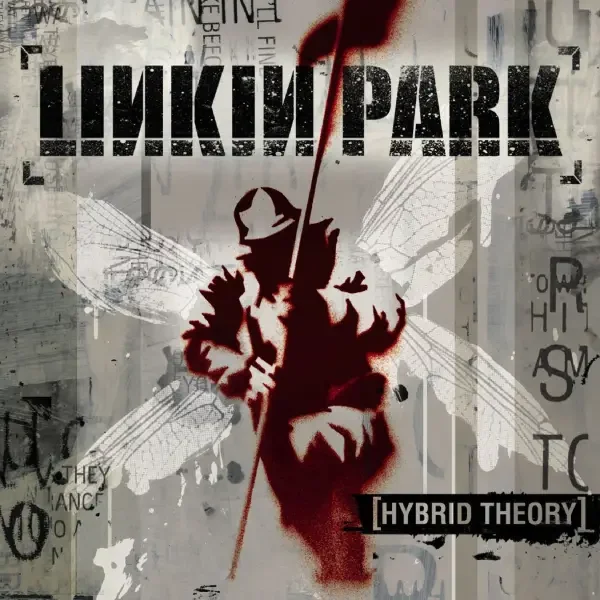
Linkin Park
– Hybrid Theory
This record moves with the momentum of a bulldozer wired to a nervous system. Every song sounds like it was engineered to hit a nerve and then grind on it. The music is built from slabs of guitar, thick beats, and vocals that ricochet between confession and fury. It feels less like a debut than a broadcast from a pressure chamber.


Best of…
Chester Bennington doesn’t sing so much as detonate. His voice cracks, soars, and bleeds, turning pain into something weaponized. Mike Shinoda counters with clipped declarations, grounding the chaos with control. That duality shapes the album’s pulse—rage in one hand, calculation in the other. The push between the two feels volatile, but the structure never collapses.
There’s a sleekness to the chaos. Samples click in place like hidden machinery, scratching surfaces while the guitars lock into grooves that feel surgically heavy. Every track barrels forward, no excess, no wasted breath. It’s a record that thrives on directness, never blinking, never softening its grip.
Choice Tracks
Papercut
A tightrope of paranoia strung across sharp riffs and pounding rhythm. Bennington sounds like he’s unraveling in real time while Shinoda hammers the diagnosis into place.
One Step Closer
All edges, no curve. The guitars slice through air like metal shears, and Bennington’s throat-shredding outburst turns frustration into pure combustion.
Crawling
A claustrophobic spiral of unease. The verses whisper, the choruses erupt, and the vocal delivery teeters on collapse. It’s suffocating by design.
In the End
The most restrained moment, but no less impactful. Piano lines cut through the noise while the chorus sticks like an echo you can’t shake.
Hybrid Theory is blunt, volatile, and unflinchingly direct. Chester Bennington and Mike Shinoda drive its urgency, turning personal turmoil into sharp, heavy pop structures that refuse to loosen their grip.