
Courtney Barnett
– Sometimes I Sit and Think, and Sometimes I Just Sit
Courtney Barnett turns everyday tension into sharp, durable rock songs.
This album moves through daily life with a dry stare and an alert ear. The writing treats routine moments as worthy of fixation. Details pile up with casual precision. The songs feel spoken from inside a busy mind that refuses grand conclusions.
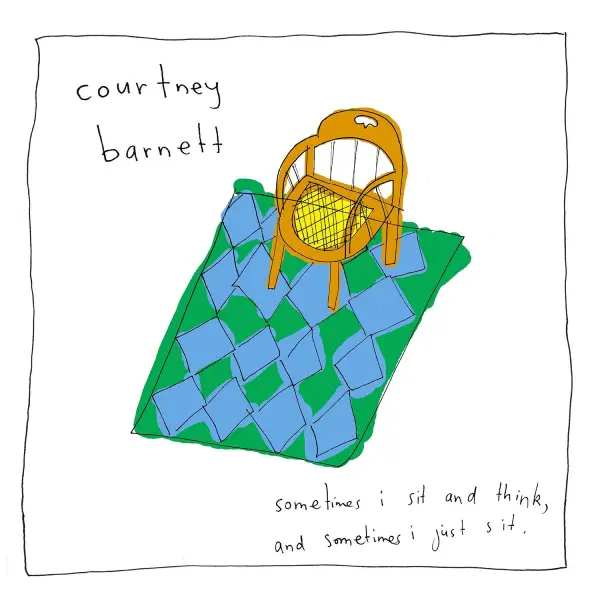


Best of…
The music stays loose and alert. Guitars sound conversational and slightly abrasive. Rhythms keep things upright without smoothing the edges. Barnett’s delivery carries humor, irritation, and self-awareness in equal measure. Every line lands because it sounds lived in.
The record holds attention through perspective rather than force. Its strength comes from commitment to small truths and unresolved thoughts. The album trusts listeners to sit with ambiguity and recognize themselves in the mess of it. That trust gives the songs staying power.
Choice Tracks
Pedestrian at Best
This track thrives on nervous energy and sharp phrasing. The guitar lines feel restless and insistent. Lyrical snapshots stack frustration and self-doubt into a public monologue. It stands out for turning inner noise into a form of blunt release.
Depreston
A measured pace carries quiet observations about place and displacement. The arrangement stays restrained and clear. Its cultural weight comes from treating housing, desire, and unease as inseparable facts rather than abstract concerns.
Nobody Really Cares If You Don’t Go to the Party
The song circles anxiety with wit and persistence. Repetition mirrors overthinking without softening the mood. It resonates by naming social exhaustion plainly and letting the discomfort sit without resolution.
Sometimes I Sit and Think, and Sometimes I Just Sit captures modern unease through sharp detail and conversational bite. The album values observation, humor, and honesty. Its songs linger by trusting small moments to carry meaning.
Some records feel like a direct conversation with the listener—witty, unfiltered, a little anxious, a little profound. Courtney Barnett’s Sometimes I Sit and Think, and Sometimes I Just Sit is one of those albums, a deadpan monologue of overthinking, overanalyzing, and occasionally just shrugging at life’s absurdity. It’s observational, packed with detail, and delivered with the kind of effortless cool that makes you wonder if she’s making it all up on the spot. Spoiler: she’s not. There’s a craft to this rambling, a controlled chaos that turns the mundane into something revelatory.
The guitars jangle, crunch, and sprawl across these songs, sometimes laid-back, sometimes revving up like a car peeling out of a parking lot. The lyrics are packed with self-deprecating humor and existential dread, but it never feels weighed down by either. Instead, it moves with a restless energy, darting between sardonic punchlines and moments of startling sincerity. She can take a trip to the swimming pool and make it sound like a crisis, or describe real estate envy with the same intensity as a love song. And somehow, it all works.
What makes this album hit so hard is how it captures the static of modern life—thoughts looping, emotions contradicting, everything feeling both important and meaningless at the same time. The words tumble out like an internal monologue you didn’t realize you needed to hear, and by the time it’s over, you feel like you’ve just spent an hour inside someone else’s head. A funny, sharp, occasionally overwhelmed someone, sure—but someone who makes everyday life feel like poetry in a flannel shirt.
“Pedestrian at Best”
A burst of manic energy, all distortion and self-doubt delivered at breakneck speed. The sarcasm is thick, the delivery is biting, and the whole thing feels like it could spin out of control at any moment—but never does.
“Depreston”
A quiet, drifting reflection on gentrification, nostalgia, and existential dread disguised as a house-hunting trip. The melody is gentle, the lyrics are devastating, and by the end, you feel like you’ve lost something you never had.
“Elevator Operator”
A punchy, spoken-word vignette about a disillusioned office worker ditching the grind for something better. The storytelling is vivid, the humor is razor-sharp, and the guitars chug along like a restless mind refusing to settle.
“An Illustration of Loneliness (Sleepless in New York)”
An insomnia-fueled spiral, where the smallest details become overwhelming. The guitars shimmer and sway, echoing the woozy, inescapable cycle of overthinking at 3 a.m.
“Nobody Really Cares If You Don’t Go to the Party”
A perfect distillation of social anxiety, indecision, and the push-pull between wanting to be alone and fearing you’re missing out. The guitars thrash, the chorus hits like a revelation, and it’s all over in two and a half minutes—because really, there’s no time to waste.